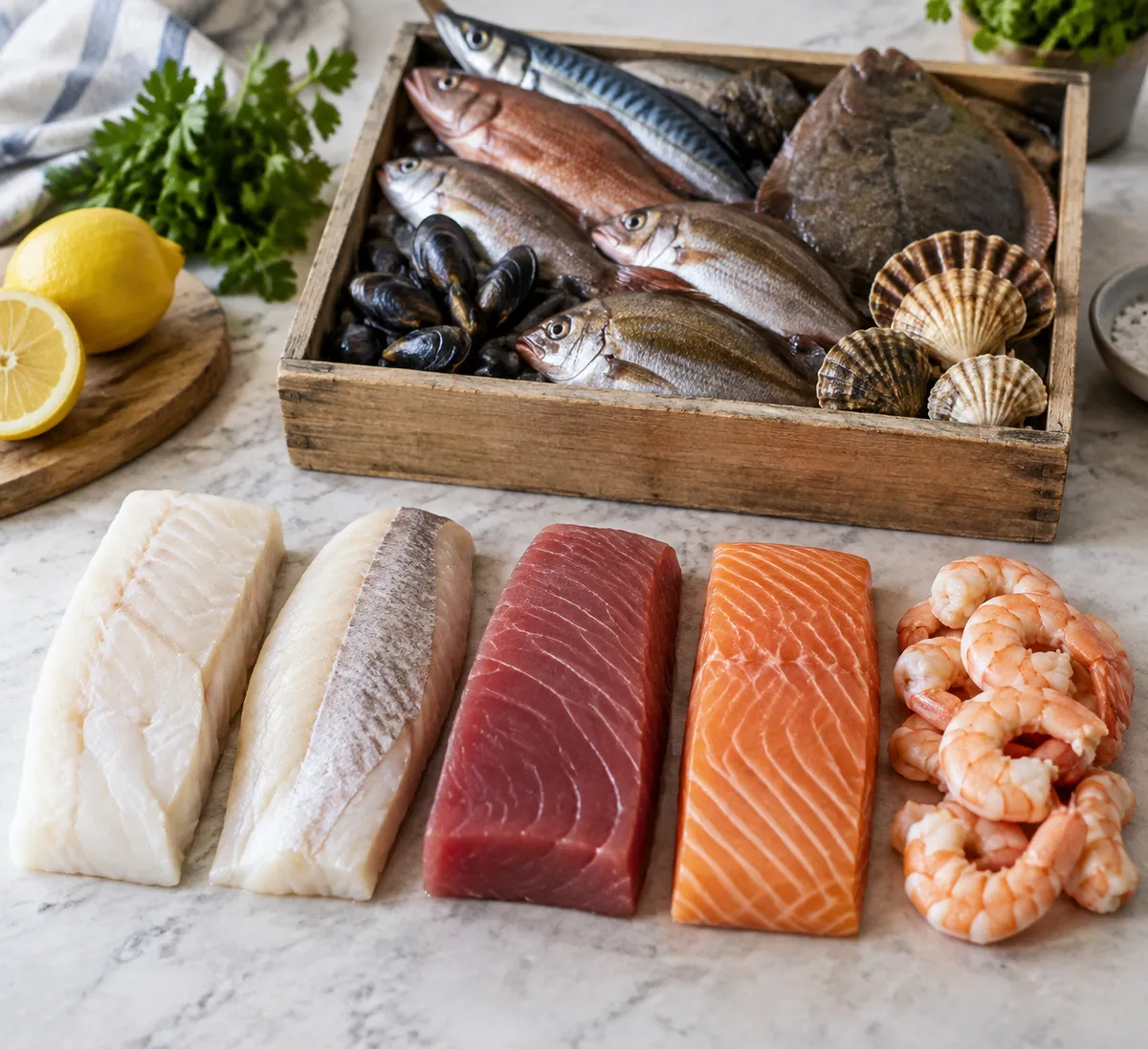
A century of seafood recipes in Good Housekeeping has revealed something quietly striking about how Britain cooks. According to research reported by Phys, the range of fish and shellfish presented to U.K. readers has "narrowed" over the past hundred years, shrinking toward a familiar "big five": cod, haddock, tuna, salmon and shrimp.
If your own fish rotation looks suspiciously like that list, you're not short on imagination. You've been shaped by a system. Here's what the research says about how that happened, and how to cook your way back to variety.
What the study found
The research tracked seafood recipes in Good Housekeeping across a century. Early on, the magazine's pages showed a diverse range of fish and shellfish. Today's cooking is concentrated on just five staples.
Per the report, the researchers argue the shift isn't simply about changing taste. It reflects changes in supply chains, supermarkets, imports, convenience foods and cultural expectations. In other words, what landed on the plate was decided long before anyone picked up a fork.
Why five fish took over
The study points to several forces working together:
- Supermarkets. When shopping consolidates into a few big chains, the fish counter tends to stock what moves reliably in volume.
- Imports and supply chains. Staples like tuna, salmon and shrimp are easy to source consistently and ship in bulk.
- Convenience foods. Fillets, fish fingers and tinned products favour a small number of familiar species.
- Cultural expectations. Once a handful of fish becomes "what fish is," recipes and shoppers keep reinforcing it.
My own read: this is a feedback loop. Recipes follow what's in the shop, and the shop follows what people ask for. Narrowing happens without anyone deciding it should.
Why it matters beyond the dinner table
As sustainability, food security and healthier eating climb the agenda, the U.K.'s habits look increasingly mismatched with what its own waters produce, according to the coverage. Britain's catch is diverse, yet our recipe repertoire is not. Cooking a wider range of species is one way to close that gap, and it fits the broader conversation about what we used to eat, what we forgot, and what could return.
One caution: the research summary doesn't give price or nutrition comparisons, so treat claims that lesser-known fish are automatically cheaper or healthier as a hypothesis to test at your own fishmonger, not a finding.
How to widen your own fish rotation
You don't need a 1920s cookbook to start. These steps are practical ways to act on the study's message.
1. Swap one of the five each week
If you'd normally buy cod or haddock, ask what else is white and firm that day. Keep your usual method (baked, pan-fried, in a pie) so only one thing changes.
2. Ask the fishmonger what's local and in season
This is the simplest counter to supermarket narrowing. Ask what was landed nearby and how they'd cook it. Staff often know preparation tips no recipe card includes.
3. Use familiar recipes as training wheels
A fish pie, chowder, curry or tray bake works with many species. Substituting a less familiar fish into a dish you already know lowers the risk of a disappointing dinner.
4. Go hunting in old recipe books
The study draws on magazine archives, and your own shelves or a library may hold similar treasures. Older recipes often name fish and shellfish that rarely appear in modern weeknight cooking. Pick one, adapt the method to your kitchen, and see what you've been missing.
5. Keep it paleo-friendly if that's your approach
Fish and shellfish suit a paleo-style plate naturally. Pair a pan-seared fillet with roasted vegetables and a lemon-herb dressing, and variety in the fish itself becomes an easy way to keep meal plans from going stale.
The bigger takeaway
The narrowing wasn't about British palates losing curiosity. It was shaped by shops, supply chains and convenience. That means you can reverse it in a small way every time you shop.
This week, skip the default and ask your fishmonger what they'd cook tonight.