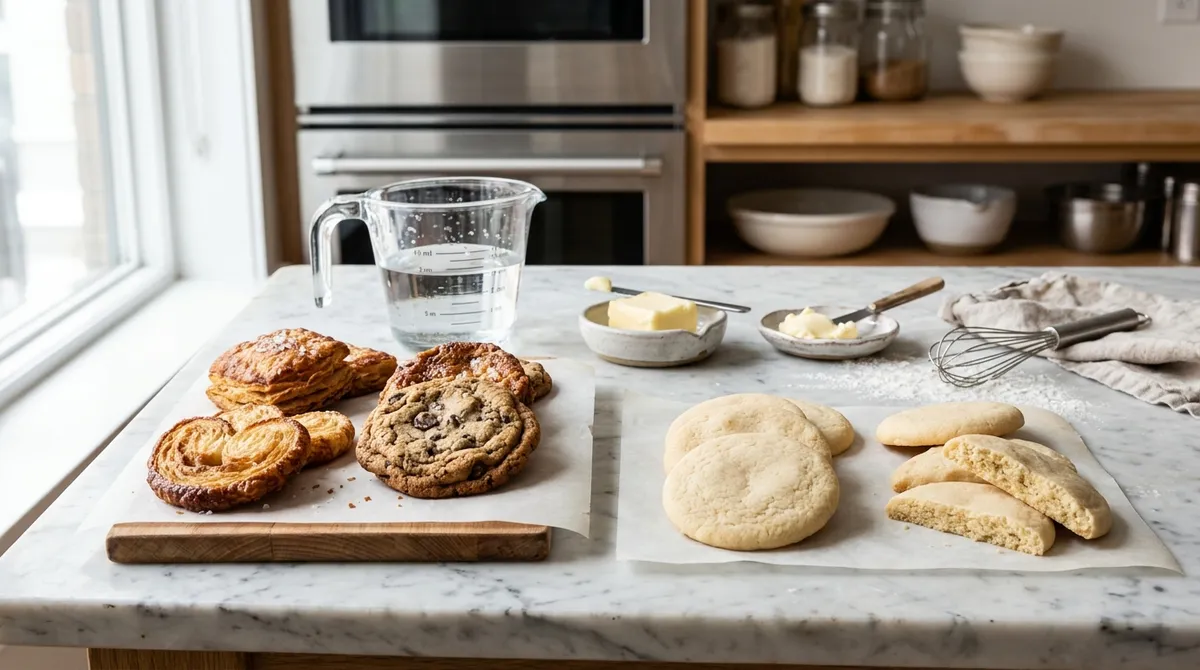
If you've ever swapped margarine for butter in a cookie recipe and ended up with a flat, greasy disappointment, you're not alone. According to food science, the differences between these two fats go far deeper than brand loyalty or nutrition labels — they come down to chemistry, and that chemistry has real consequences inside your oven.
It All Starts With Fat Structure
Butter and margarine may look similar sitting on a countertop, but their internal fat structures are fundamentally different. Butter is a dairy product made primarily from animal fat, while margarine is typically processed from plant-based oils. According to reports, these structural differences affect everything from how a dough comes together to how a finished cake holds its crumb.
Fat plays a crucial role in baking by coating flour proteins, trapping air during creaming, and contributing to tenderness. When the fat behaves differently — as butter and margarine do — the end result can shift in texture, flavor, and appearance in ways that catch even experienced bakers off guard.
Water Content: A Hidden Variable
One of the less obvious differences between butter and margarine is water content. According to food science reporting, the amount of water in a fat source directly influences how steam is generated during baking — which in turn affects rise, flakiness, and overall texture.
This is especially relevant in pastry, where flaky layers depend on precise moisture behavior. Too much or too little water at the wrong stage of baking can collapse those delicate layers before they have a chance to set. For home bakers attempting croissants or pie crusts, this is where the butter-versus-margarine debate becomes most consequential.
Why Spreadable Margarine Is Especially Problematic
Not all margarines are created equal, and according to reports, spreadable margarine varieties can be particularly disruptive to baking texture. These products are often formulated with higher water content and softer fat compositions designed for easy spreading straight from the fridge — not for withstanding oven temperatures.
When used in cookies or cakes, spreadable margarine can lead to batter that's too loose, baked goods that spread excessively, or a greasy mouthfeel in the final product. Food scientists point to processing differences as the key culprit: the fats in spreadable margarine simply don't behave the same way under heat.
The Flavor Factor: Browning and Beyond
Beyond structure and moisture, flavor is another area where butter holds a distinct edge in many baking applications. Butter contains natural flavor compounds — including diacetyl and other dairy-derived molecules — that contribute to its characteristic richness. It also undergoes the Maillard reaction during cooking, producing the complex, nutty notes associated with browned butter.
Margarine, being a processed product, generally lacks these same flavor compounds. According to food science sources, this means that in recipes where butter flavor is front and center — think shortbread, pound cake, or butter cookies — margarine substitutes may produce a noticeably blander result.
When Margarine Can Work
That said, margarine isn't without merit in the kitchen. In recipes where fat primarily serves a structural or moisture-retaining role rather than a flavor one, a quality stick margarine can perform reasonably well. According to reports, the key is choosing a solid stick margarine rather than a spreadable or whipped variety, as these more closely mimic the fat content and behavior of butter.
For everyday muffins, some quick breads, or recipes with bold flavors like chocolate or spices that can mask subtle fat differences, margarine may be a practical and more affordable option.
Melting Behavior and Shelf Life
Another dimension food scientists highlight is melting behavior. Butter has a relatively narrow melting range tied to its natural fat composition, which contributes to the way it coats the palate and releases flavor. Margarine's melting profile, shaped by its processing and added emulsifiers, can differ in ways that affect both mouthfeel and how a baked good feels when eaten.
Shelf life is also influenced by fat chemistry. According to reports, the different compositions of butter and margarine mean they age and oxidize at different rates — a consideration for bakers who make goods in advance or store them for several days.
Making the Call in Your Kitchen
For home bakers, the practical takeaway from food science is straightforward: understanding what fat does in a recipe helps you make smarter ingredient decisions. Butter is generally the better choice for pastry, cookies, and any recipe where flavor and texture precision matter. Margarine can be a reasonable substitute in less delicate applications, provided you reach for a solid stick variety.
As ingredient costs and dietary preferences continue to shape how people shop and cook, knowing the chemistry behind your fat choices means fewer baking surprises — and more consistently satisfying results.