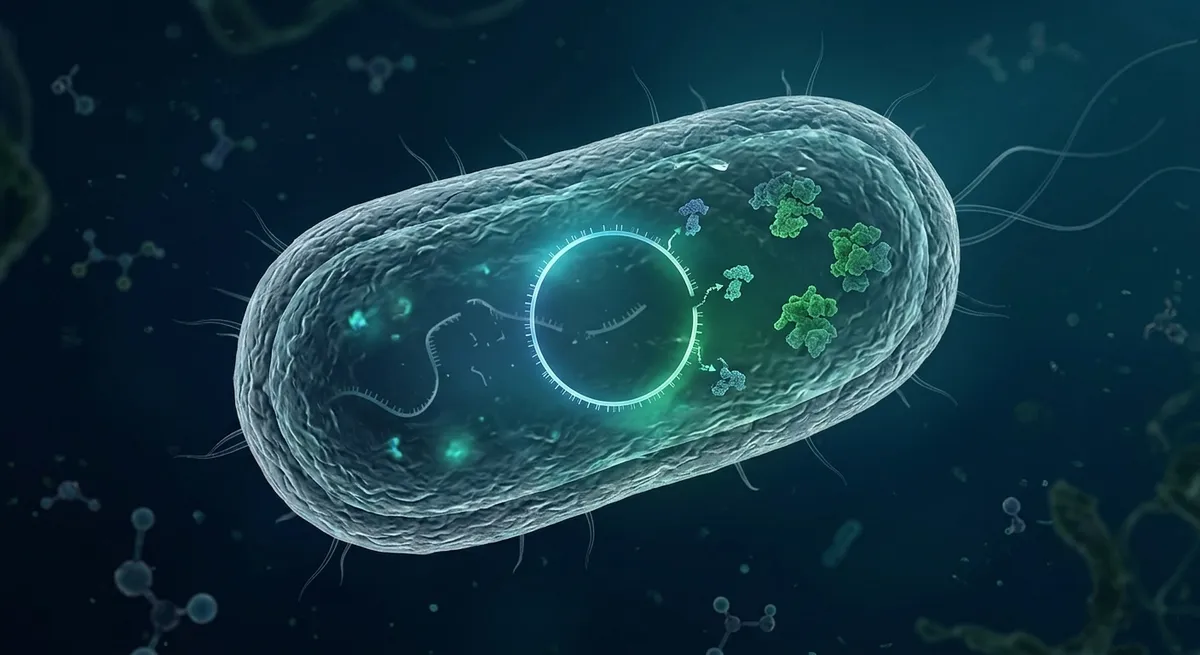
Recent advancements in synthetic biology have given rise to a game-changing technology called CRESEnT. This innovative system circularizes messenger RNA (mRNA) within microbial cells, significantly enhancing their ability to produce proteins. Researchers have found that this new method can boost protein output by as much as 5.95 times, effectively transforming microbes into highly efficient protein factories.
The Breakthrough of Circular mRNA
The conventional linear shape of mRNA is prone to degradation, limiting its effectiveness in producing proteins within microbial cells. By contrast, circular mRNA boasts enhanced stability, which plays a crucial role in increasing protein production. The development of CRESEnT represents a paradigm shift, offering a new tool for researchers aiming to optimize microbial production systems.
Implications for Industry
As biotechnical companies work fervently to refine cell factories for the creation of biofuels, bioplastics, pharmaceuticals, and sustainable chemicals, enhancing microbial productivity remains a significant hurdle. The CRESEnT technology opens the door to overcoming this bottleneck by allowing for the manipulation of RNA's structure. Gone are the days of solely relying on promoters and ribosome-binding sites; RNA shape now emerges as a critical factor that can significantly affect production outcomes.
Why RNA Shape Matters
Using the analogy of thread versus ring, CRESEnT reimagines mRNA's configuration from a linear thread into a stable circular shape. This transformation enhances resistance to degradation and facilitates more efficient protein translation. Just as a threaded piece of yarn may fray and break, leading to interruptions in a knitting project, linear mRNA can fail to produce proteins effectively. Transforming it into a circular form allows for continuous, robust protein synthesis, leading to higher outputs.
Advancing Sustainable Manufacturing
The applications of CRESEnT technology extend far beyond just boosting protein production. With the ability to produce proteins more effectively, industries can leverage this technology to create bioplastics, pigments, and pharmaceuticals with greater efficiency. In an era where sustainability is paramount, this advancement may allow for the production of valuable resources in a more environmentally friendly manner, thereby contributing positively to global sustainability goals.
Conclusion
The emergence of circular mRNA as a viable tool in synthetic biology heralds a new age of possibilities for microbial manufacturing. The CRESEnT method not only enhances protein production capabilities but also sets the stage for significant advancements in the biotechnology sector. By optimizing mRNA structure, we may be on the precipice of revolutionizing how we manufacture essential products sustainably, making microbial factories even more powerful vehicles for change.