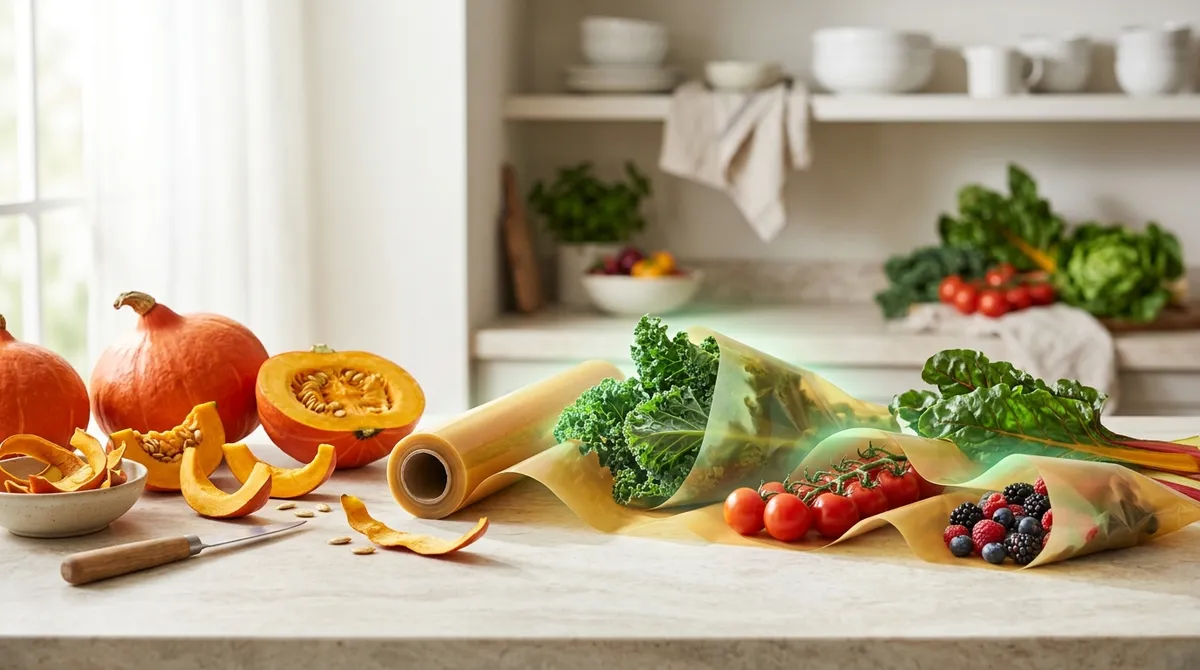
With nearly 40–50% of harvested fruits and vegetables wasted from farm to consumer, innovative solutions are urgently needed to tackle food waste. Researchers at Kyushu University have developed a groundbreaking eco-friendly food packaging film made from pumpkin peel waste. This technology not only provides a sustainable alternative to conventional plastic but also extends the shelf life of produce by suppressing microbial growth, reducing moisture loss, and guarding against light damage.
The Connection to Food Waste
Food waste is a significant global challenge, impacting hunger, environmental sustainability, and resource use. By addressing this issue with new packaging technologies, we can potentially reduce the overwhelming amount of fruits and vegetables that spoil before reaching consumers. The pumpkin peel waste project exemplifies how food waste can be transformed into a valuable resource for smarter food preservation methods.
How Does It Work?
The packaging film made from pumpkin peels operates through several innovative mechanisms:
- Suppression of Microbial Growth: By keeping bacteria at bay, the film helps to extend the freshness of fruits and vegetables, reducing spoilage.
- Reduced Moisture Loss: Enhanced moisture retention maintains produce quality, which is crucial for ensuring that fruits and vegetables stay appealing and safe to eat.
- Protection Against Light Damage: By blocking harmful light exposure, the film helps improve the longevity of perishable items, contributing to its overall effectiveness in extending shelf life.
These innovative features make the pumpkin peel film a promising option for environmentally conscious consumers and retailers looking to minimize waste.
Circular Economy Solution
This project represents a significant shift towards a circular economy model in food production. Rather than relegating pumpkin peels and other agricultural byproducts to landfills, this research showcases how they can be reimagined as high-tech solutions. By turning food waste into functional materials, we not only reduce landfill contributions but also create products that support healthy eating and environmental responsibility.
The Role of Science in Sustainability
Understanding the materials that make these advancements possible is key. The pumpkin peel packaging utilizes carbon quantum dots for its properties rather than toxic metal nanoparticles often found in conventional packaging. Carbon quantum dots are safer for food contact, aligning with growing consumer preferences for clean and safe food alternatives.
Democratizing Food Preservation
As markets evolve, especially in regions lacking a cold-chain infrastructure, this new technology has the potential to democratize food preservation. Effective sustainable packaging could empower communities to significantly reduce food spoilage, ensuring that more food reaches those in need. This could have far-reaching implications for food security, particularly in vulnerable populations.
Conclusion
Integrating food waste into innovative solutions not only addresses the pressing issue of food preservation but also paves the way for sustainable developments in our agricultural systems. The pumpkin peel packaging film is just one example of how thinking outside traditional waste management can lead to positive change. By tackling food waste with creativity, we can help build a healthier planet for everyone.