A Lost Civilization Hidden in the Amazon
Deep beneath the forest canopy of northern Bolivia, an entire ancient world has been hiding in plain sight. Thanks to lidar technology — a system that uses laser pulses to penetrate dense vegetation and reveal the terrain below — researchers have uncovered the remarkable remains of the Casarabe culture, a sophisticated civilization that thrived from AD 500 to 1400 across an estimated 20,000 km².
For paleo diet enthusiasts, this discovery isn't just a jaw-dropping archaeological headline. It's a window into how ancient peoples fed themselves, managed their land, and sustained complex communities in one of the world's most challenging environments — lessons that resonate powerfully with the principles behind eating and living like our ancestors.
What Did the Casarabe People Actually Eat?
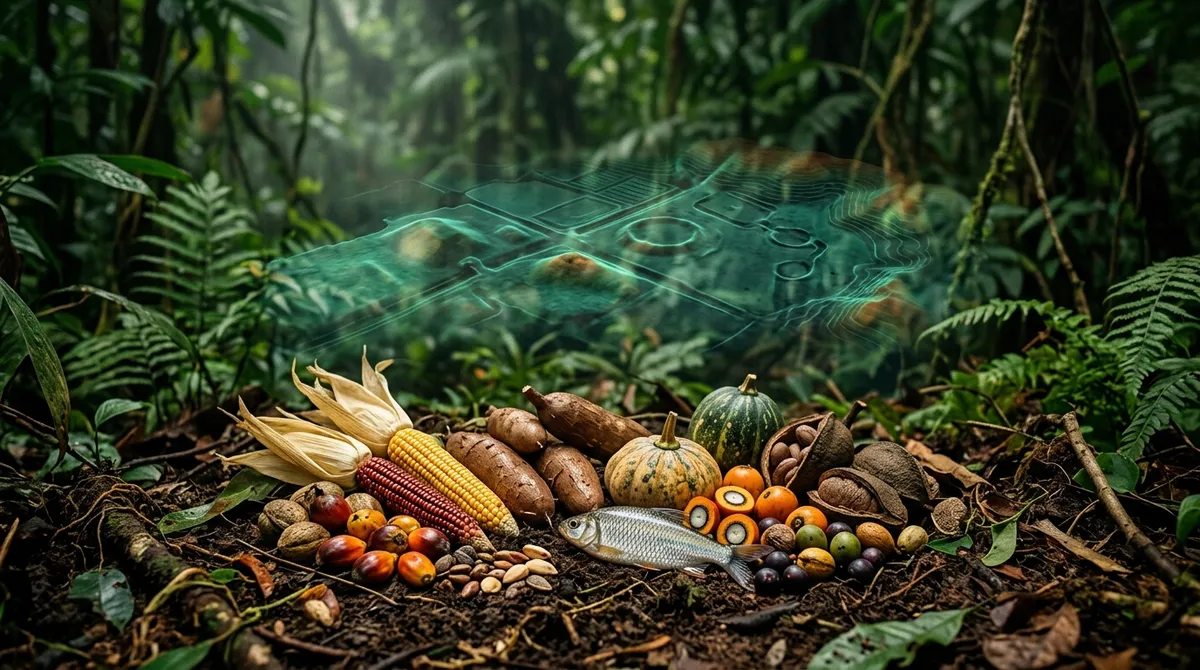
According to reports from the discovery, the Casarabe culture developed a drained-field agriculture system with maize as their primary crop, supplemented by a diverse range of secondary crops. That combination of a starchy staple alongside varied plant foods mirrors what many nutritionists today describe as a foundation of ancestral eating — diverse, whole, and locally sourced.
Beyond crops, the civilization's landscape was shaped by sophisticated water-management systems, including reservoirs and farm ponds designed to sustain food production through dry seasons. This kind of year-round food security, built entirely from the land itself, is something modern paleo practitioners aim to echo when they prioritize seasonal, nutrient-dense eating over processed convenience foods.
Interestingly, evidence of plant domestication in Amazonia stretches back to the end of the Ice Age, suggesting that the relationship between Amazonian peoples and their food sources was tens of thousands of years in the making — a truly ancient dietary blueprint.
Engineering the Earth to Nourish It
One of the most striking revelations from the Casarabe discovery is the existence of Amazonian Dark Earths — deliberately engineered soils that combined charcoal, bone, and organic waste with native soil. These weren't accidental byproducts of human habitation. They were intentional, nutrient-rich growing mediums created to boost agricultural productivity in a tropical environment that naturally resists large-scale farming.
For the paleo community, which places enormous value on soil health and regenerative food systems, this is a remarkable ancestral precedent. The Casarabe people were, in essence, composting and soil-building on a civilizational scale — achieving sustainable food production centuries before modern regenerative agriculture became a buzzword.
A City Built Around Nature, Not Against It
The Casarabe civilization operated on what researchers describe as a low-density tropical urbanism model — a sprawling, interconnected landscape of settlements, causeways, canals, and forest islands rather than a dense, compact city. Their four-tier settlement hierarchy stretched across the savanna, with primary settlements covering up to 3 km² and monumental architecture including 20-meter conical pyramids and large public gathering structures.
Critically, this entire civilization was organized around engineered water systems and oriented in alignment with celestial bodies, suggesting that cosmology, ecology, and food production were deeply intertwined aspects of daily life — not separate concerns.
This holistic approach to living within a landscape, rather than dominating it, is something the modern paleo movement often aspires to. Eating paleo isn't just about what's on your plate — it's about reconnecting with the rhythms and resources of the natural world.
Why This Rewrites the Ancestral Eating Story
For decades, the Amazon was characterized by Western science as a sparsely populated, largely unmodified wilderness — an assumption that the Casarabe discovery fundamentally dismantles. According to reports, this view is now being overturned by evidence of a sophisticated, interconnected urban landscape that rivaled other great pre-Columbian civilizations.
The Casarabe weren't struggling to survive in an inhospitable jungle. They were thriving, building, farming, and engineering on a grand scale for nearly a millennium. Their diet and land management strategies were so effective that they sustained a complex, multi-tiered society across a vast tropical region.
For paleo diet followers who look to ancestral human experience as a guide for modern nutrition, this discovery adds remarkable depth to the picture. The Amazon wasn't empty — it was full of people who had cracked the code of sustainable, nutrient-rich living long before modern nutritional science existed.
Lessons for the Modern Paleo Table
So what can today's paleo enthusiasts take away from the Casarabe civilization?
- Diversify your plate: Their reliance on maize alongside diverse secondary crops reflects the ancestral principle of varied, whole-food nutrition.
- Respect soil health: Engineered soils packed with charcoal, bone, and organic matter remind us that nutrient-dense food starts with nutrient-dense earth.
- Think seasonally: Reservoirs and farm ponds ensured year-round food access — a model for planning paleo meal prep around seasonal availability.
- Eat with intention: When cosmology, ecology, and food production are unified, eating becomes more than fuel. It becomes culture.
The Casarabe people built a civilization that lasted nearly 900 years in one of the world's most demanding environments. That's an ancestral track record worth paying attention to.